Stop Collecting Contacts — Start Building a Community That Actually Has Your Back
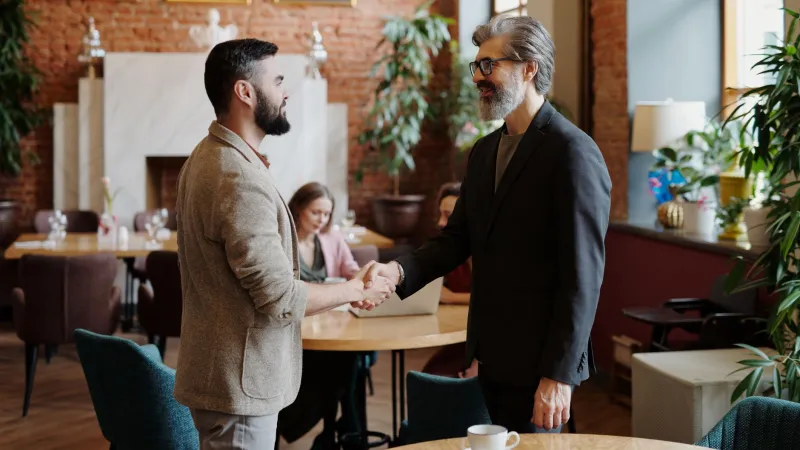
Let's be honest about networking for a second.
Most of us have been to the kind of event where everyone is technically talking to each other but nobody is actually connecting. People scan the room while you're mid-sentence. Business cards get handed over like currency. The whole thing feels like a transactional performance, and you leave with a stack of cards you'll never look at again and a vague sense of having wasted a Tuesday evening.
That's not community. That's speed-dating for LinkedIn profiles.
The good news is there's a fundamentally better approach — and it's been around a lot longer than the networking industrial complex. It's called showing up, consistently, in a place where people actually know your name.
The Research Is Clear (Even If We Keep Ignoring It)
Let's start with the data, because the case for intentional community membership is overwhelming and we tend to treat it like a lifestyle preference rather than a strategic imperative.
A landmark Harvard study tracking the lives of hundreds of men over 85 years — one of the longest-running studies on human happiness ever conducted — found that the single strongest predictor of late-life health and happiness wasn't wealth, professional achievement, or even genetics. It was the quality of a person's relationships.
Separately, research published in the journal Social Science & Medicine found that people with strong social ties have a 50% higher likelihood of survival than those with weak social connections. That's not a rounding error. That's the equivalent of quitting smoking.
And on the professional side? A study from LinkedIn found that 85% of jobs are filled through networking. Not job boards. Not recruiting algorithms. People vouching for people they actually know and trust.
The science is telling us the same thing from every angle: your relationships are your most valuable asset. The only question is whether you're treating them that way.
Why Social Clubs Work When Casual Networking Doesn't
The key ingredient that most networking events lack — and that membership-based social clubs naturally provide — is repeated exposure over time.
Psychologists call it the mere exposure effect: we tend to like people more simply because we've seen them before. But it goes deeper than familiarity. When you see the same people week after week in a low-pressure, enjoyable setting, something shifts. You move from acquaintance to familiar face to genuine friend. And genuine friends are the ones who actually refer you for jobs, introduce you to their networks, check in when you've gone quiet, and show up when things get hard.
A LinkedIn connection you met once at a conference will not do any of those things.
This is why membership in a community organization like Lincoln's Club is worth thinking about differently than you might think about attending a random networking event. The event is a one-time transaction. The membership is an ongoing relationship with a community — and that community compounds over time, the same way a good investment does.
The Mental Health Dividend
Beyond career advancement, there's a deeply personal case for active club membership that doesn't get discussed enough: the effect on your mental and emotional wellbeing.
The American loneliness epidemic isn't just a statistic — it's something millions of people feel acutely, often without quite being able to name it. High-functioning, professionally successful people are not immune. In fact, the "lonely at the top" phenomenon is well-documented: the more senior your position, the harder it often becomes to maintain authentic friendships, because the power dynamics and professional stakes make genuine vulnerability difficult.
A social club offers a rare kind of neutral ground. When you're at a Lincoln's Club event, you're not someone's boss or employee. You're not a client or a vendor. You're just a person, in a room with other people, sharing an experience. That context makes authenticity possible in a way that most professional settings don't.
Regular participation in community activities has been linked to reduced rates of depression and anxiety, lower cortisol levels, improved sleep, and even better immune function. Your body, it turns out, knows the difference between a Zoom call with your team and a genuine laugh with a friend. One of those is actually restorative.
How to Actually Get Value From Your Membership
Okay, so you're convinced. You join. Now what? Here's where a lot of people leave value on the table: they show up occasionally, hover near the edges, and then wonder why they don't feel more connected.
Genuine community membership is an active practice, not a passive subscription. Here's how to make it work:
Show up consistently, even when you don't feel like it. The nights you almost bail are often the ones that matter most. Consistency is what converts acquaintances into friends. Aim for at least two or three events a month and commit to that rhythm for at least 90 days before you evaluate whether it's working.
Go deep with a few people, not wide with many. It's tempting to try to meet everyone at every event. Resist that impulse. One real conversation is worth ten superficial ones. If you find someone genuinely interesting, stay in that conversation longer than feels comfortable. Ask a follow-up question. Be curious.
Offer before you ask. The fastest way to become someone people genuinely want to help is to be someone who genuinely helps. Make introductions. Share resources. Volunteer for club events. When you give without keeping score, you build the kind of social capital that can't be manufactured.
Use events as a starting point, not an ending point. The event is the introduction. The real relationship gets built in the follow-up. Send a message the next day. Suggest coffee. Invite someone to the next event. The club gives you the context; you have to build the relationship.
Be a regular, not a tourist. There's a real difference between someone who drops into a community occasionally and someone who's genuinely embedded in it. Regulars get introduced by name. They get the inside jokes. They become the reason other people keep coming back. That status takes time to earn, but it's worth every minute.
The Long Game
Here's the mindset shift that changes everything: stop thinking about your social life as something that happens to you when circumstances align, and start treating it as something you build deliberately over time.
The people who look back at their 60s and 70s with genuine satisfaction — the ones with deep friendships, strong professional legacies, and a real sense of belonging — almost universally invested in community throughout their lives. Not because they were naturally more social or more likable, but because they chose, repeatedly, to show up.
Lincoln's Club exists to make that choice as easy and rewarding as possible. The events, the membership structure, the welcoming environment — all of it is infrastructure for the relationships you build. But the building is up to you.
Your network is your net worth. But more than that, your community is your foundation. And foundations don't build themselves.